
 by
Christian Fischer
by
Christian Fischer
Shutterstock is reshaping the role of the traditional stock content library. With its latest platform evolution, the company is moving beyond simple asset discovery and positioning itself as a more complete creative environment powered by both human-made content and artificial intelligence.
The updated Shutterstock platform is designed for businesses, agencies, marketers, and creators who need to produce visual content faster without losing control over quality, licensing, authenticity, or commercial usability. Instead of treating AI as a standalone tool, Shutterstock is integrating it directly into the creative process, allowing users to search, generate, edit, refine, and license content within one connected workflow.
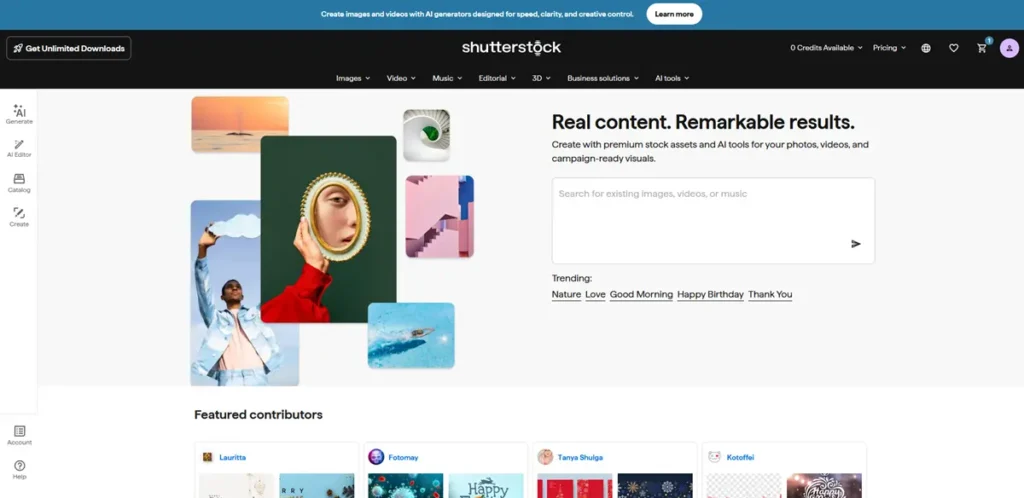
At the center of this development is a clear idea: creative work should start with trusted human-made assets and then be enhanced by AI when speed, flexibility, or customization is needed.
Shutterstock has long been associated with high-quality stock photos, videos, illustrations, music, editorial content, and other licensable assets. However, the needs of creative teams have changed significantly. Brands no longer want to simply download finished assets and adapt their campaigns around them. They want content that can be shaped around specific messages, formats, audiences, and visual identities.
This is where Shutterstock’s new platform direction becomes important. The company is turning its content library into a more active creative production system. Users can still begin by discovering premium assets, but they can now go further by adapting and transforming those assets with built-in AI capabilities.
This makes the platform more useful for modern workflows, where a campaign may require multiple versions of the same visual, different formats for different channels, or small adjustments that make an asset fit a very specific creative brief.
One of the strongest aspects of Shutterstock’s approach is its continued focus on content created by real contributors. While many AI platforms begin with a prompt and generate an output from nothing, Shutterstock’s model is built around existing, licensable creative material made by photographers, videographers, illustrators, and artists around the world.
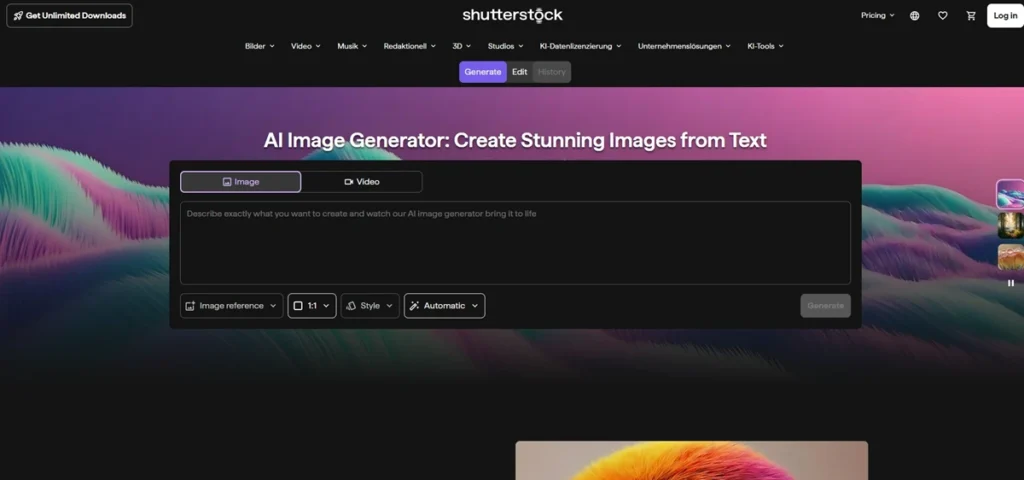
That human foundation gives the platform a different role in the AI market. Instead of replacing original creative work, Shutterstock is using AI to make that work more flexible and adaptable. A user might find an image, video, or visual concept that is almost right, then use AI tools to adjust it for a specific campaign, brand style, layout, or message.
For companies that are cautious about using AI-generated visuals, this approach may feel more practical. The creative process begins with real content from a trusted source, while AI becomes a tool for refinement and personalization.
The new Shutterstock platform brings together a range of AI-powered features aimed at making creative production easier and more efficient. These include AI image and video generation, inline editing tools, conversational search, prompt enhancement, and reference-based workflows.
The conversational search function is particularly useful because it allows users to describe what they need in more natural language. Rather than relying only on short keyword combinations, creative teams can search in a way that better reflects the mood, context, or visual direction of a project.
Reference-based features also play an important role. Content reference and first frame reference help users guide AI outputs more precisely and maintain visual consistency. This can be especially valuable for teams working on campaigns where style, tone, and brand alignment need to remain consistent across multiple assets.
Shutterstock also highlights its proprietary Model Match technology. This feature is designed to match a user’s prompt with the most appropriate AI model for the task. Instead of forcing users to understand technical model differences, the platform helps choose the right option automatically, making the AI workflow simpler and more accessible.
Many creative teams currently work across several disconnected tools. They may search for stock content on one platform, generate AI concepts somewhere else, edit assets in another tool, and then separately check whether the final result can be used commercially. This fragmented process can slow down production and create uncertainty.
Shutterstock’s updated platform is designed to solve that problem by bringing the most important creative steps together. Discovery, AI generation, editing, refinement, licensing, and support are all part of the same ecosystem.
For marketers and agencies, this can create a more efficient workflow. Instead of moving between different tools and platforms, users can begin with inspiration, develop a visual direction, refine the result, and prepare content for use in real campaigns from one place.
The company is also expanding into AI-native environments, including a Shutterstock app available in ChatGPT. This shows that Shutterstock wants to make its assets and creative tools available within the spaces where users are already brainstorming, prompting, planning, and creating.
For businesses, the ability to generate or edit content quickly is only one part of the equation. The content also has to be suitable for public use, brand-safe, legally clear, and ready for commercial campaigns.
Shutterstock is addressing this need by emphasizing commercial-ready licensing, indemnification, and human review for AI-generated content. This positioning is important because many companies remain careful about how they use generative AI, especially in advertising, marketing, and brand communication.
By combining AI-powered production with licensing support and review processes, Shutterstock is presenting its platform as a more reliable option for organizations that want the benefits of AI without unnecessary legal or operational risk.
Another notable element of Shutterstock’s platform evolution is the continued role of contributors. When contributor-created content is edited with AI tools and then licensed through the platform, contributors can still earn royalties.
This is a significant point in the wider conversation around AI and creative work. Many photographers, artists, and content creators are concerned that AI could reduce the value of human-made assets. Shutterstock’s model takes a different direction by keeping contributor content at the center of the workflow and allowing AI to extend its usefulness.
In this system, human creativity provides the foundation, while AI helps users adapt that foundation for more specific needs.
The platform update is also part of Shutterstock’s larger transformation as an AI-focused company. Beyond serving marketers, brands, and creative professionals, Shutterstock is also active in the AI infrastructure space through its Data Licensing & AI Services business.
This area supports technology companies and AI developers with rights-cleared training data, curated datasets, model evaluation, fine-tuning, benchmarking, human-in-the-loop workflows, and creative feedback. These services help companies build and improve AI models using licensed content and expert evaluation.
As a result, Shutterstock is operating on two levels. It provides practical creative tools for end users while also supporting the development of the AI systems behind modern creative technology.
Shutterstock’s latest move reflects a major shift in how visual content is produced. Creative teams increasingly need speed, flexibility, and scale, but they also need trust, consistency, and commercial confidence.
By combining premium human-made assets with AI generation, editing, conversational discovery, workflow tools, licensing support, and human expertise, Shutterstock is expanding far beyond the traditional stock content model.
The platform is becoming a connected creative system where users can find inspiration, shape ideas, customize visuals, and prepare content for real-world use more efficiently.
For brands, agencies, and creators, the value is simple: begin with trusted creative content, use AI to make it more precise, and move from concept to finished asset with greater speed and confidence.
THE AUTHOR
Christian Fischer
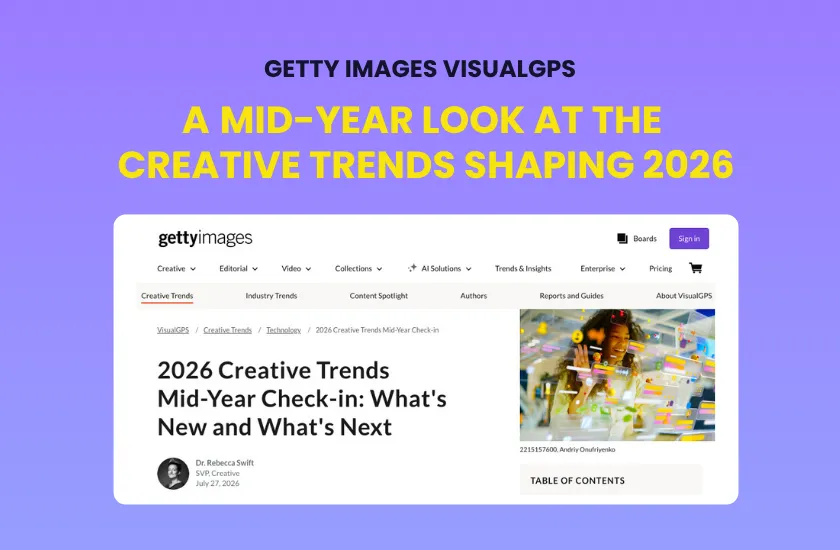
Getty Images takes a fresh look at the latest developments shaping the creative industry in its Visual GPS – Trends & Insights series. In “2026 Creative Trends Mid-Year Check-in: What’s New and What’s Next” Getty Images explores how the three leading creative themes of the year have evolved across the AMER, EMEA and APAC regions six […]
Canva unveils the new Affinity — a free, all-in-one design app combining professional tools, AI features, and creative flexibility for designers, studios, and teams.
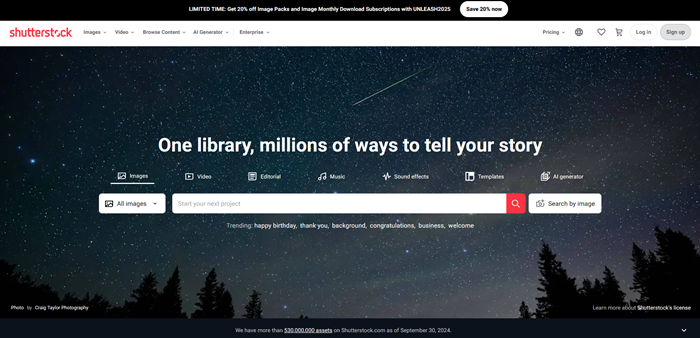
Calling all creators! Shutterstock is running a rapid, week-long flash sale, offering an excellent opportunity to acquire any of their standard assets at a 20% markdown. This amazing deal is fleeting: it expires on October 6, 2025, so you’ll need to move fast to secure your coupon code and take advantage of the savings! Details of the […]